When Flexible Geometry Outperforms Boxed Packs
High-speed passenger trains such as Eurostar, TGV, and ICE coaches feature overhead luggage racks roughly 30 cm to 34 cm deep with curved front retention lips. Similarly, 50-seat regional turboprop aircraft (Bombardier CRJ-200 or Embraer ERJ-145) offer shallow overhead bins roughly 21 cm tall. A hard-shell roller simply cannot compress to clear those apertures and gets valet-tagged onto the tarmac.
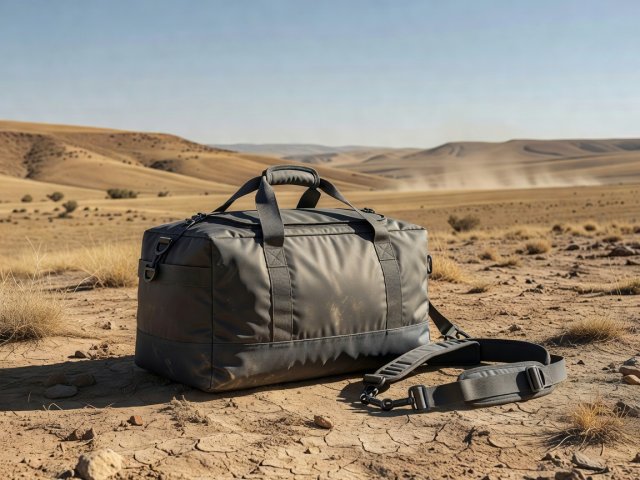
A soft duffel loaded to 80% capacity easily squashes down from 25 cm to 18 cm when slid horizontally onto a tight shelf. Furthermore, an unpartitioned main bay accepts awkward three-dimensional items—winter boots, insulated ski pants, helmet shells, or padded camera inserts—that waste corner gaps inside heavily compartmentalized office-oriented travel packs.
The Carry-Mode Compromise
Traditional cylinder duffels with a single cross-body shoulder strap put asymmetric shear across one trapezius and bang against your hip through crowded stations. Modern convertible duffels solve this with removable padded backpack straps clipped across the top lid—which means the zip-flap rests against your spine during backpack carry, while the reinforced waterproof base faces outward against rain and passing crowds.