Category 04 • Textile & Polymer Specsheet

Denier Ratings, Coatings, and Seam Taping

Tag lines reading "1000D heavy-duty fabric" reveal linear yarn weight without stating polymer tensile strength, weave density, or hydrostatic backing. Here is how to decode real textile longevity before purchasing any soft-sided pack.

What Denier Actually Measures

Denier (abbreviated D) measures linear mass density: the weight in grams of 9,000 meters of a single fiber strand. A 500D yarn weighs 500 grams per 9 kilometers; a 1000D yarn weighs twice as much. Crucially, denier alone does not measure abrasion durability or puncture resistance because different polymers possess vastly different molecular strength.

For instance, 420D high-tenacity nylon 6,6 routinely equals or exceeds the tear and rub performance of 600D generic polyester while trimming meaningful weight from the empty shell. Meanwhile, ultra-high-molecular-weight polyethylene (UHMWPE / Dyneema) yarns achieve extraordinary tensile strength at tiny 150D to 210D gauges, though their slick fibers demand laminated film layers to hold seam stitches steady.

Weave Architecture Matters as Much as Yarn Thickness

  • Plain Weave & Ripstop Grid: Ripstop weaves thicker reinforcement threads every 3 mm to 6 mm along both warp and weft. If sharp metal brackets nick a panel, the heavy grid stops the tear from zipping down the side of the bag.
  • 2×2 Basketweave (Ballistic): Smooth, heavy twin filaments produce minimal surface friction and high initial abrasion resistance, yet punctured edges can slowly unravel if left unhemmed.
  • Cordura Air-Textured Yarn: Mechanical air-jet texturizing fluffs filament surfaces slightly so multiple loops share sliding friction against asphalt, delaying thread thinning.
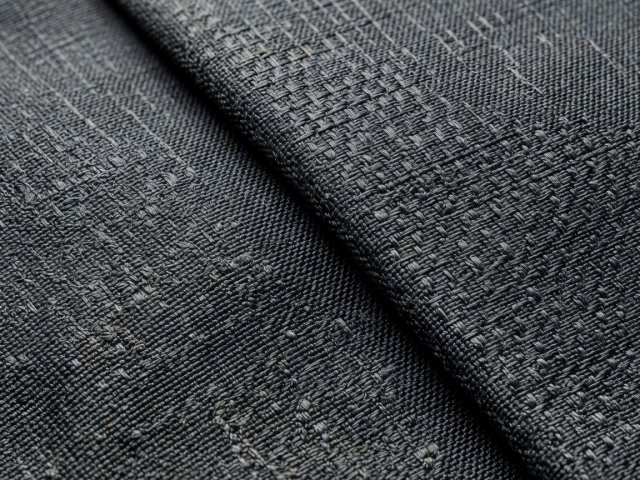
Close-up studio view of woven ballistic nylon and cross-hatched ripstop travel fabric swatches
Tightly packed warp and weft threads dictate tear propagation and moisture holdout.
THREAD SPECS • BONDED NYLON #69

Stitching & Seam Binding

Even 1000D Cordura fails if sewn with thin polyester thread at wide stitch spacing. Quality travel packs pair bonded #69 or #92 nylon thread (6 to 8 stitches per inch) with nylon grosgrain seam binding taped cleanly over raw interior fabric edges so seams do not pull out under load.

Comparative Textile Matrix for Cabin Bags

Fabric Grade Polymer Family Typical Weight (g/m²) Best Structural Placement
210D HT Ripstop Nylon Polyamide (Nylon 6 or 6,6) 150 – 200 g/m² Interior dividers, lightweight pack liners, lid pockets
500D Cordura Nylon Nylon 6,6 Air-Textured 250 – 290 g/m² All-around cabin backpack panels and shoulder straps
1000D Cordura / 1680D Ballistic Nylon 6,6 High-Tenacity 340 – 460 g/m² Pack base plates, corner scuff zones, checked duffels
600D / 900D Recycled PET Recycled Polyester 240 – 360 g/m² Urban packs and wheeled luggage panels (requires bar-tacks)
X-Pac VX21 / Ecopak Laminate Nylon/PET + X-Grid + Film 200 – 245 g/m² Weather-resistant packs needing crisp structural shape

Waterproofing: DWR, Polyurethane, and TPU Laminates

OUTER FINISH • DWR

Durable Water Repellent (Face Coat)

Applied externally so raindrops bead and roll off instead of saturating the outer yarns ("wetting out"). Modern C0 PFAS-free DWR coatings require periodic low-heat tumble activation or spray reapplication after heavy dirt accumulation to maintain beading.

UNDERSIDE • PU vs. CARBONATE

Polyurethane Backings & Hydrolysis

Traditional polyether polyurethane (PU) underside coatings block water from penetrating the weave, yet damp storage in humid closets triggers chemical hydrolysis within 5 to 8 years—turning the interior sticky and flaky. Carbonate-modified PU coatings resist hydrolysis significantly longer.

LAMINATE • TPU vs. PVC

Thermoplastic Polyurethane Film

Heat-laminated TPU films bonded directly to nylon or polyester ripstop eliminate sticky hydrolysis entirely, stay flexible in deep winter freezes, and allow radio-frequency welded waterproof seams without brittle cracking common to older PVC tarpaulins.

Seam Taping vs. Bound Seams in Travel Gear

True waterproof seam tape only adheres smoothly to flat laminated faces without thick interior webbing layers. Most structured carry-on packs contain dozens of multi-layer seams connecting padded shoulder harnesses, zipper gussets, and laptop dividers, making full seam-taping impractical. In heavy downpours, a stitched nylon-bound bag with coated zippers resists road spray for 20 to 30 minutes, after which a simple pack rain cover or internal dry sack remains the reliable safeguard for electronics.

For practical comparisons of how these fabrics translate into packed weight across 28 L to 45 L enclosures, explore our dedicated backpack engineering breakdown and soft duffel guide.